Chinese Paper Arts: The Complete Guide to China's Paper Traditions
Chinese paper arts go far beyond paper cutting: folding, lanterns, kites, fans, effigies, and painting all grew on paper. Explore every art China built on a sheet.
When paper became cheap enough to spare, China did something remarkable with it: it turned a writing surface into a medium for nearly every art it had. Paper cutting, paper folding, lanterns, kites, fans, funeral effigies, and the entire tradition of ink painting — each one is a Chinese paper art, and together they form a family tree with a single root: a sheet of paper, invented in China around two thousand years ago.
Most visitors meet only the most famous branch, the paper cutting tradition called jianzhi. This guide introduces the whole tree, because each art explains the others, and because "Chinese paper art" is a much bigger room than the red window flowers that stand at its door.
The Root: Paper Itself
Every branch of this family grew after one invention. Paper, refined and recorded around the year 105 and credited to Cai Lun, was cheap, light, and everywhere — and unlike silk, wasting it did not hurt. That last point matters. An art that requires cutting, folding, or burning its material only flourishes when the material is abundant. Paper was China's first disposable medium, and Chinese paper arts are what happened when every household had it.
Paper Cutting: The Oldest Branch
Paper cutting, jianzhi (剪纸), is the senior art of the family — roughly fifteen centuries old, descended from silk cutting, and now UNESCO-listed. Its forms — window flowers at New Year, wedding cuttings, lantern panels, embroidery stencils — are explored in our guides to what paper cutting is, how it is made, and its 1,500-year history. It is the art most people mean when they say "Chinese paper art," and for good reason: no other paper art carries so much of daily Chinese life in so small a sheet.
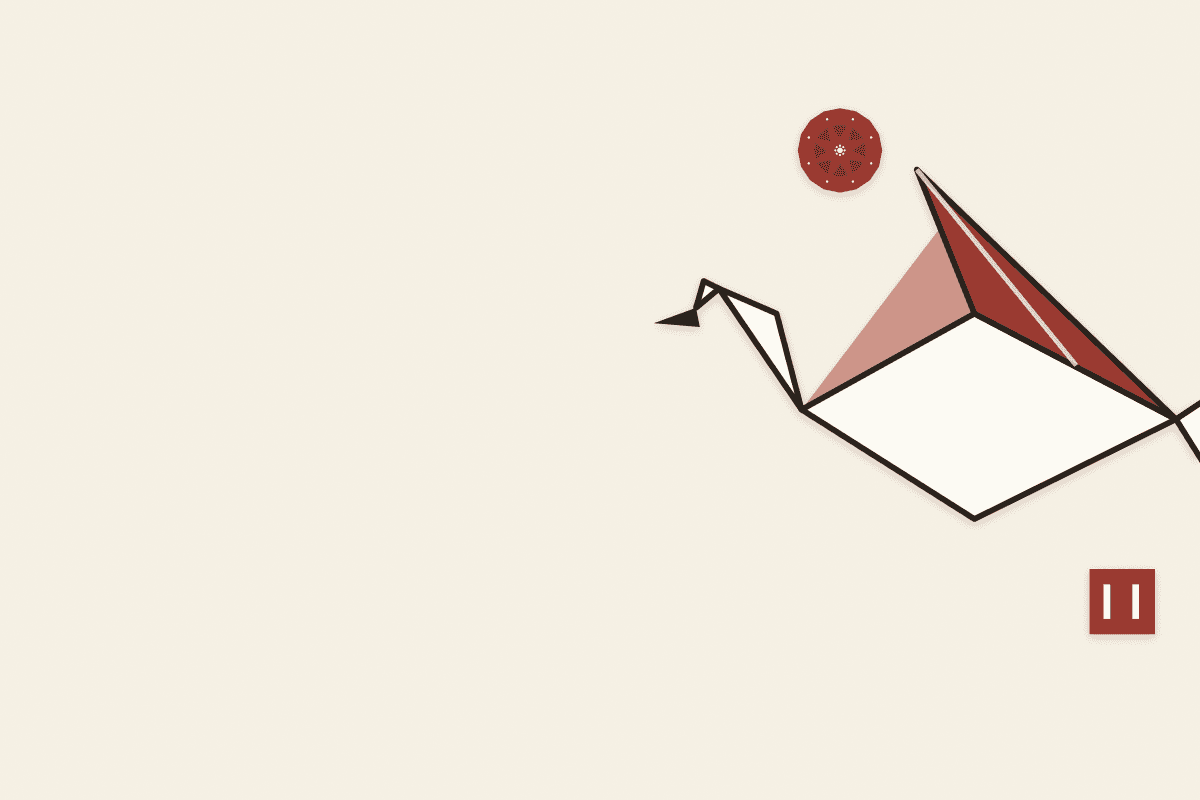
Paper Folding: Zhezhi
Before origami became a household word, China had zhezhi (折纸), its own folding tradition. Chinese children have folded paper boats and hats for generations, and folded paper objects have a long ritual life — folded ingots and flowers made as funeral offerings, cousins of the joss paper tradition described in our guide to Chinese papers.
Japanese origami grew from the same East Asian root and became the global standard, but the Chinese tradition is no less old and no less its own. Zhezhi favors practical forms — envelopes, boxes, boats, the folded paper fans and flowers of temple offerings — over the menagerie of Japanese origami, and it shares the same quiet lesson: a single sheet, folded correctly, becomes a structure.
Paper Lanterns
The paper lantern is China's festival light. A bamboo frame, a shell of thin paper or oiled silk, a candle inside — and a courtyard becomes a constellation. Lanterns reach their peak at the Lantern Festival, the fifteenth day of the first lunar month, when riddle lanterns (dengmi, 灯谜) hang in parks and temple fairs with puzzles written on their sides. Weddings hang red lanterns as a blessing; shops hang them to invite prosperity.
Paper lanterns and paper cutting meet constantly — the finest lanterns carry cut-paper panels, so the flame shines through the openwork. A lantern with a paper-cut dragon or phoenix is two paper arts in one.
Paper Kites
China has flown kites for more than two thousand years, and for most of that history a kite meant a bamboo frame covered with paper. Weifang in Shandong Province is the kite capital — its international kite festival draws builders from every continent — and the region's kites are famous for exactly the same qualities as its paper cuttings: bold color, sharp silhouette, and motifs drawn from the luck dictionary of Chinese art.
The kite shares paper cutting's vocabulary on purpose. A kite is a window flower that flies; the same artists often made both, and a good kite painter was expected to cut as well as paint.
Paper Fans
The paper fan is China's most portable paper art. The round fan (tuanshan, 团扇), a paper or silk panel on a bamboo handle, is the older form — the one held in the hands of Tang dynasty ladies in paintings. The folding fan (zheshan, 折扇) arrived later and became the scholar's accessory, its pleated paper face covered with calligraphy, landscapes, or a few quick flowers, so that opening a fan was like unrolling a small hanging scroll.
Both forms put Chinese paper to work the way it likes to be used: as a surface for the brush. A painted fan is calligraphy in motion.
Paper Effigies: Zhizha
The most spectacular and least known of the paper arts is zhizha (纸扎) — paper effigies built on bamboo frames, made to be burned. At funerals and ancestral rites, workshops produce paper houses with tiled roofs, paper cars, paper servants, paper smartphones — offerings so the departed lack nothing in the next world. The craft uses the full tool kit of the paper arts: cut panels, folded structures, painted surfaces — all assembled with the care of fine carpentry, then deliberately sent up in smoke.
It is the art that reveals what the others share. Chinese paper arts treat paper as a stand-in for things that matter too much to waste: wishes, luck, messages, memory. The paper is the message.
Painting and Calligraphy: Paper as Canvas
The most refined branch of the family is the one where paper becomes the art's true surface. Chinese ink painting and calligraphy are paper arts in the strictest sense — the paper is not support but collaborator. On Xuan paper, ink spreads, feathers, and breathes in ways no canvas allows, which is why painters call it the king of papers, and why museums restore thousand-year-old scrolls with Xuan made the traditional way. The comparison with ordinary "rice paper" shows how much of Chinese painting lives in its surface.
Where to Start
The family tree is easiest to enter at its lowest branch:
- Paper cutting — a DIY kit with pre-drawn patterns produces a finished window flower in an afternoon, and the skills transfer upward to lantern panels and kite decoration.
- Folding — a stack of colored paper and a few traditional folds; no tools at all.
- Collecting — a handmade paper cutting or a sheet of Xuan paper is the whole tradition in a frame.
Whichever branch you take, you are climbing the same tree: one invention, two thousand years, and every art a different answer to the question of what a sheet of paper can become.